

単層屋根膜は、以下のような多くの理由から、最も人気のある屋根材のひとつとなっている:
- 柔軟性
- 軽量
- 耐久性と寿命
- メンテナンスが容易
- 取り付けが簡単
- 競争力のある価格
- 環境にやさしい
- エネルギー効率
Single ply roof membranes are typically categorized as thermoplastic membranes. One of the key benefits of thermoplastic membranes is the ability to heat weld their seams and create a permanent seal. Our guide explains how hot air welding works.
The two most common thermoplastic single ply roof membranes are Polyvinyl Chloride (PVC) and Thermoplastic Olefin (TPO). These membranes are usually offered in white or light colors because the lighter colors reflect sunlight before it can be absorbed, potentially reducing building cooling costs. See our roofing membrane welding machines for PVC and TPO.
PVCやTPO膜は通常、強度と安定性を高める補強層を含んでいる。本来耐火性を持つPVC膜は、通常ポリエステルやガラス繊維で補強され、柔軟性を付与するために可塑剤などの様々な添加剤を含んでいる。通常、ポリプロピレンとエチレンプロピレンゴムのブレンドであるTPO膜は、通常ポリエステルで補強され、難燃剤や紫外線吸収剤などの添加剤が含まれています。
These membranes share the same range of sheet widths - 6 to 12 feet - and thickness - 45 mils to 90 mils. When they are installed, a properly executed heat seam is critical to their durability and longevity. Roofers make these seams with hot air welding, which melts the membrane surfaces with heated air and presses them into one watertight seam.
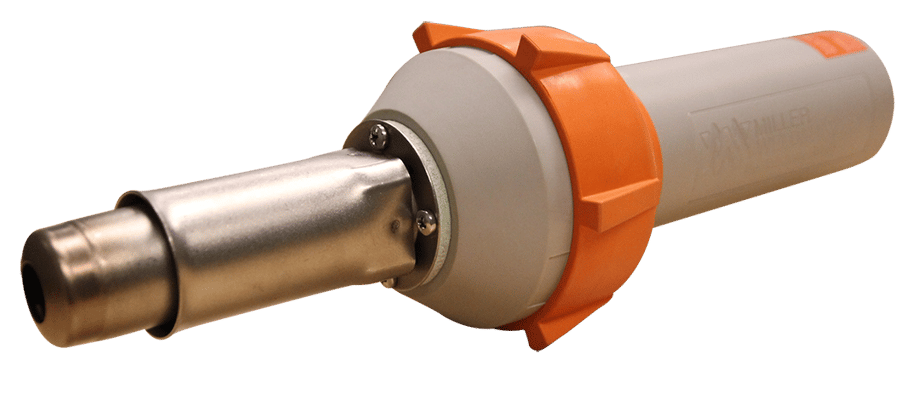
For repair and finish work on the roof, Miller Weldmaster's EliteAir hand roof welder heat welds roofing membrane seams. Roofing manufacturers who weld membrane panels in-house use the TG3600, the T300 Flex or a Moduline Geomembrane Multi-Roll line.
Contact one of our roofing specialists to find the right machine for your TPO roof membrane or PVC roof membrane welding application.